
Why Companies Need a Corporate English Training Platform (Not Just Courses)
English courses don’t scale with growing teams. Learn why companies switch to corporate English training platforms to improve visibility, adoption, and performance.
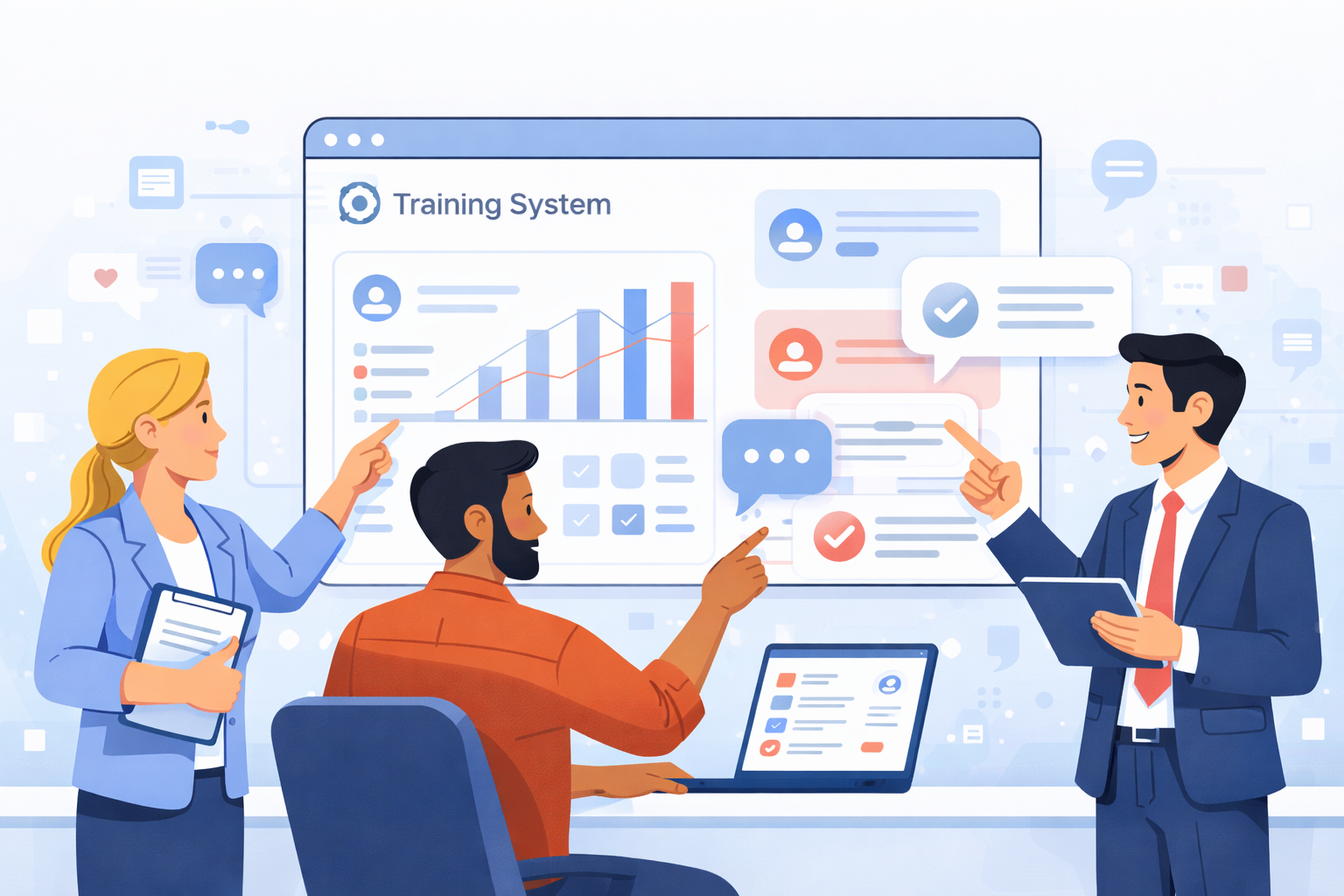
When English Training Stops Scaling
At some point, many companies hit the same wall.
English training exists. Employees attend classes. Budgets are allocated.
But results are unclear.
As teams grow, companies start noticing:
different English standards across teams
low or uneven participation
no visibility for HR or L&D
no clear connection between training and business impact
This is usually the moment when companies move from asking “Which English course should we choose?” to asking “How do we manage English training across the organization?”
That shift marks the transition from courses to systems Corporate English Training: How Companies Increase Team Productivity by 20–30% | corporate English training at scale
Why Traditional English Courses Don’t Work at Company Scale
Courses are designed for individuals. Companies operate at the system level.
As soon as a company becomes:
international
remote or hybrid
fast-growing
classic courses start breaking down.
Common symptoms:
new hires wait weeks or months to join training
different vendors run different programs
no shared communication standards
HR manages everything manually
Training exists — but control doesn’t.
This is why companies that rely only on courses often struggle to align English with real workflows.
What a Corporate English Training Platform Actually Is
A corporate English training platform is not just a place to host lessons.
It’s an operational layer that allows companies to:
design role-based learning paths
onboard teams continuously
standardize communication practices
track progress and adoption in real time
scale training without adding operational overhead
Instead of managing schedules, spreadsheets, and vendors, HR and L&D teams manage one system.
This approach supports the same system-level logic described in modern corporate English training Corporate English Training: How Companies Increase Team Productivity by 20–30% | corporate English as infrastructure
Platforms vs Courses: A Practical Comparison
Criteria | English Courses | Corporate English Platform |
Scalability | Limited | High (up to 10× faster) |
Customization | Minimal | Role- and team-based |
Onboarding | Manual | Automated |
Analytics | Fragmented | Centralized |
ROI tracking | Rare | Real-time visibility |
Remote teams | Hard to manage | Built-in by default |
Courses teach individuals. Platforms operate communication.
This distinction becomes critical as companies grow.
Why Platforms Matter More for International and Remote Teams
International teams amplify every weakness in training.
Different regions. Different time zones. Different communication habits.
Without a platform:
standards drift
onboarding slows down
best practices stay local
This is especially visible in international and distributed teams [INTERNAL LINK → How Companies Train International Teams in English | training international teams in English]
Platforms make it possible to keep English training consistent — regardless of geography.
Visibility and Control: The HR Perspective
One of the most common frustrations we hear from HR and L&D teams:
“We invest in English training, but we don’t really know what’s happening.”
Platforms change this by providing:
participation and engagement data
team-level progress tracking
early signals of low adoption
insights into where communication actually breaks
This turns English training from a black box into a manageable process.
A Common Objection — And the Reality
“Isn’t a platform overkill for English training?”
Sometimes — yes.
If:
the company is small
English is used occasionally
teams work mostly locally
a simple course may be enough.
But once:
English is used daily
teams are international or remote
HR needs measurable outcomes
manual approaches stop working.
At that point, the question isn’t if you need a platform — it’s when.
What Makes a Good Corporate English Training Platform
From experience, effective platforms share a few core traits:
role-based learning paths
practical, work-based content
analytics HR can actually use
flexibility across teams and regions
ability to scale without complexity
Without these, platforms risk becoming just another LMS with English content — and adoption drops fast.
How Platforms Improve Adoption (Not Just Reporting)
Adoption is where many training initiatives fail.
Employees disengage when training feels:
disconnected from real work
repetitive
irrelevant to their role
Platforms that integrate learning into daily workflows:
increase participation
reduce resistance
make progress visible
When employees see that training helps them work better, adoption follows naturally.
This is also where platforms outperform classic Business English formats Business English vs Corporate English: What’s the Real Difference? | difference between courses and corporate English
Measuring the Impact of a Corporate English Training Platform
Companies using platforms don’t focus only on language levels.
They track:
reduction in clarification loops
faster async decision-making
improved meeting efficiency
better client communication
smoother onboarding of international hires
This is where English training becomes a business lever, not a cost line.
How to Decide If Your Company Needs a Platform
Ask these questions honestly:
Are multiple English initiatives running in parallel?
Do teams use English differently across the company?
Can HR clearly see progress and engagement?
Does training scale as fast as hiring?
If most answers are “no”, a platform is likely the missing piece.
FAQ: Corporate English Training Platforms
Does a platform replace teachers or coaches? No. It supports them by providing structure, data, and scalability.
How long does implementation take? Most companies can roll out a platform within weeks, not months.
Will employees resist another platform? Only if it feels irrelevant. Platforms tied to real work usually see strong adoption.
How much does a corporate English training platform cost? Pricing depends on team size and configuration. We usually start with a free audit to assess needs and scope.
Final Thoughts
English training becomes complex the moment it becomes important.
Courses help individuals improve. Platforms help organizations align.
Companies that treat English as part of their operating system — not a side benefit — gain speed, clarity, and scalability as they grow.
Author’s note
This article is based on our experience building and implementing corporate English training platforms for international and remote teams, with a focus on adoption, visibility, and measurable business impact.